Ghana Innovation Farm open for entries

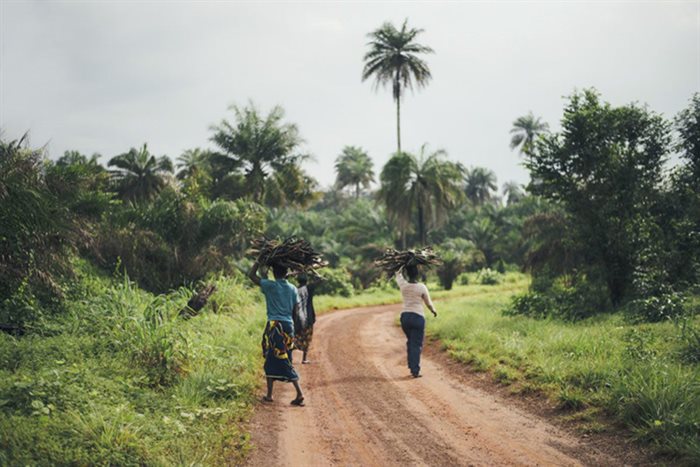
Young Architects Competitions (YAC) and the Manni Group have launched the third edition of the Manni Group Design Award: Ghana Innovation Farm, which aims to enable the design of a hub from where knowledge and technologies can be shared with the local population in order to meet their needs.

Source: YAC

The cash prize of €20,000 will be distributed to the winning proposals selected by an international jury panel composed of:

  • Mariam Kamara (Atelier Masomi),
  • Andreas Fries (Herzog & de Meuron),
  • Eduardo Souto de Moura,
  • Diana Lopez Caramazana (UNDP),
  • Giancarlo Mazzanti (El Equipo Mazzanti),
  • Raul Pantaleo (TAMassociati),
  • Giuseppe Grant (Orizzontale Architettura),
  • Enrico Frizzera (Manni Group),
  • Matthew Ott (GCCA),
  • Lorenzo Bottinelli (BASF),
  • Michele Bruni (InspiraFarms), and
  • Manuel C. Kabana (IFRIA).
Source: YAC

Source: YAC

The brief

Some paradoxes are particularly painful.

There is much talk of space race, rapid and relentless consumption of resources. Many people have too much, far beyond what is necessary. Yet, in numerous places of the world, people are still suffering from hunger.

There are no simple solutions to the gaps that have always affected human society. Still, what is certain is that often poverty is not caused by insufficient natural resources.

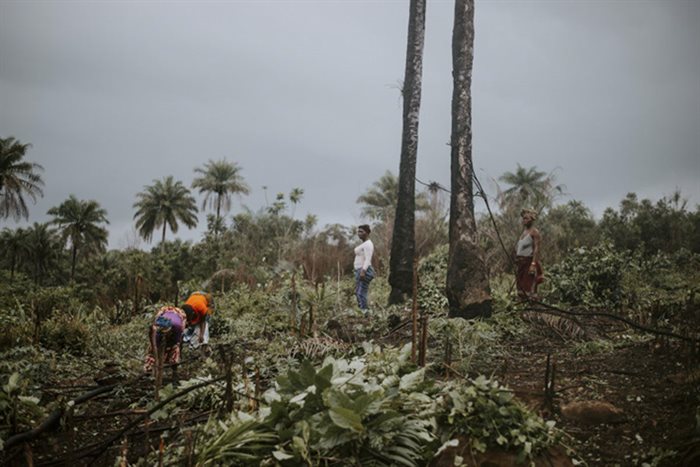
One third of the population of the Global South practices agriculture in contexts that are highly suited to such activity. Yet, despite a favourable climate and right soil conditions, it is precisely these peoples that obtain less value from the agri-food supply chain. This is because often the main causes of vulnerability are not natural but infrastructural.

In order to guarantee sufficient nutriment, both production aspects and the possibility to preserve food or food resources play a crucial role.

The cold chain is one of the core issues of the global nutrition challenge. InspiraFarms is well aware of that. For more than 10 years, it has been at the forefront in promoting technological development and dissemination together with the construction of facilities able to stabilise and preserve food produced in emerging countries.

Consistent with the United Nations goals, in one of the emerging African agricultural scenarios, InspiraFarms is about to build a technological and cultural hub to address the global challenges of food supply chains. It will generate a greater availability of products and job opportunities in a place where more than 25% of the local population live below the poverty line.

In this hub, a system of infrastructures and a training centre will share with the local population knowledge and technologies to meet their needs. This will be achieved by developing strategies to make their activities more competitive and seeking new ways to create jobs and opportunities, especially for young women and segments of the population facing higher risks.

This is the goal of Ghana Innovation Farm. It is the third edition of the Manni Group Design Award, which is InspiraFarms’ ally for the creation of a beacon of culture and innovation. It shall become a reference for the local community providing resources, knowledge, and solutions able to meet the most basic of human rights: access to food.
Source: YAC

Source: YAC

The competition is in collaboration with BASF, Renolit, Rockwool as sponsors and under the patronage of SACE, GCCA, InspiraFarms, IFRIA and Fondazione Patrimonio Acciaio.

More information about the rules, eligibility, fees and the brief is available on YAC’s website.

Article originally published on World Architecture Community.

#BehindtheMask: Architectural entrepreneur Gilbert Balinda

Set on making his mark on the continent, Gilbert Balinda is a Rwandan-Belgian architect whose career has spanned Africa, Europe, the Caribbean, and the Middle East. Currently based at the Media Mill creative hub in Milpark, Johannesburg, Balinda has worked on projects including Freedom Park, the Mandela Capture Site in Howick and the Taung World Heritage site.

Architectural entrepreneur Gilbert Balinda

He aims to ensure that cultural context, collective memory, and the human connection remain central to his work. We chatted to Balinda to find out more about his journey as an architect thus far, his creative process, and from where he draws inspiration for his work.

Were you always passionate about architecture – would you say it’s your calling?

Gilbert Balinda: I wanted to be a marine biologist or a veterinarian as a kid. I just loved animals. Architecture came later on when I finished high school in Belgium. It seemed a perfect choice because it combined art and science, and I could not make up my mind to choose just one side. So I jumped into architecture and have never regretted it ever since. But sometimes, I think it would have been less complicated to study animals than to design the human habitat.

Where does your passion for the field stem from?

Balinda: Several things feed my passion, but mainly the idea that we can create something from nothing and participate in making our cities for a better future fascinates me every day.

It does not matter how many times you have done it; it is always a thrill to see your creation getting built.

BizcommunityDescribe for us your creative process – from where do you draw inspiration when you start a project?


Balinda: At the start of a project, I like to have conversations on certain topics unrelated to architecture with a client or with my team. I find those moments of deep discussion critical to assessing the context of the client and the project. Those are important to understanding or creating an architectural vision. The concept phase is delightful because the project does not need to be constrained in solving all the issues immediately. It is a time of creative exploration that often leads me to read books on different topics and look at other disciplines and forms of art. It is also the moment where you can start creating the narrative of your project and defining the impact you want to make. Of course, not all projects are the same so the process might vary and the ideas may take more time to mature.

#BehindtheMask: Nizenande Machi, co-founder of Lucha Lunako

Your career has thus far taken you across continents. How would you say this professional and life experience has affected your work?

Balinda: Growing in different countries and continents gave me the ability to adapt quickly to a foreign context. But it has also caused me to be periodically restless and impatient. I always want to move fast and go to the next thing, which is not always positive.

Multiculturalism tends to open up a new way of thinking which is neither planned nor defined. We find ways to navigate complexities by looking at things from a different perspective.

So I would say that my experiences make me ask more questions. I try to leave more room for different interpretations and be less prescriptive.

Why is the preservation of Africa’s cultural heritage so central to your work?

Balinda: Cultural preservation is not only crucial for humankind. It is essential to the transmission of knowledge to future generations. Without preservation, we fail as a people and as a society.

My work tries to uncover some of our African histories, culture, and knowledge abandoned or told from a Eurocentric perspective. And I think a lot of our cultural heritage is still ignored or misrepresented.

What, for you, is architecture’s greatest impact on society?

Balinda: Architecture can be seen as a facet/element of society. It results from multiple individuals and collective thinking to build places where we live, work, and interact. In that sense, architecture provides the physical environment for society to live and thrive. There is a direct correlation between how a city is built and the socioeconomic, human rights, health, and quality of life.

#BehindtheMask: Nontokozo Tshabalala, 2021 Loeries Young Creative

What inspired you to strike out on your own?

Balinda: After nearly a decade working at Mashabane Rose Associate, I felt it was time to venture and start running my own thing. But the road to entrepreneurship is not always direct, so I began Gilbert Balinda Architects after two partnerships. I am still working with previous partners on specific projects, but Gilbert Balinda Architects’ current strategy is where I see my future.

What are you working on currently?

Balinda: We have a variety of projects ranging from feasibility studies to museum work. Among other projects, we are currently designing a smart village in Nigeria. A house made of volcanic rock in Kigali, Rwanda, a 4,500m2 museum for a national bank. We are also prototyping an affordable house concept with South African partners, which we intend to roll out in South Africa and on the continent.

What’s been your favourite project so far and why?

Balinda: That’s a difficult question, sometimes it feels like your children and you can’t say who is your favourite. All projects have their good side and not-so-good side. But I think the Volcanic House in Kigali aimed to be completed in 2023 will undoubtedly be fascinating because it is charged with personal history and is part of reconnecting with my home country.

#BehindtheMask: John Jacob Zwiegelaar, SA interior and architectural designer

What advice would you give to those just starting out their careers in architecture?

Balinda: Architecture is a great profession but also very time-consuming and challenging. You need to have a passion for it. If it is just for money, then seek elsewhere. Also, try to see how you can contribute differently in the profession. The competition in the sector is stiff and having a specific style and business model to differentiate you from the crowd is preferable.

What’s your favourite trend in the field to watch out for in 2022?

Balinda: Designing and building an architectural piece is often a lengthy process, making it difficult to make precise projections. The current Covid-19 pandemic is creating uncertainty in various sectors. However, we are all observing the pandemic’s catalytic effects on sustainable building and minimalism living.

As architects, this is an opportunity to rethink our models and how society is adapting to a new way of living, working, and playing.

For more information, go to gilbertbalinda.com.

How Important is Light in the Living Room?

Proper lighting is essential for any home. It is important to maintain balance between personality and the functionality of the room when it comes to lighting the living room. One can transform the entire atmosphere of their living room within the proper use of lighting. One should remember that lighting not only has aesthetic and mood enhancing values, but play an important functional role in illuminating important task areas in the living room.

Read more

Make your living room more enjoyable

Proper lighting is essential for any home. It is important to maintain balance between personality and the functionality of the room when it comes to lighting the living room. One can transform the entire atmosphere of their living room within the proper use of lighting. One should remember that lighting not only has aesthetic and mood enhancing values, but play an important functional role in illuminating important task areas in the living room.

Read more

Make your bathroom more enjoyable

Donec rutrum congue leo eget malesuada. Curabitur aliquet quam id dui posuere blandit. Vivamus magna justo, lacinia eget consectetur sed, convallis at tellus. Cras ultricies ligula sed magna dictum porta. Curabitur aliquet quam id dui posuere blandit. Proin eget tortor risus. Lorem ipsum dolor sit amet, consectetur adipiscing elit. Sed porttitor lectus nibh. Vivamus suscipit tortor eget felis porttitor volutpat. Donec rutrum congue leo eget malesuada.

Curabitur aliquet quam id dui posuere blandit. Vivamus magna justo, lacinia eget consectetur sed, convallis at tellus. Cras ultricies ligula sed magna dictum porta. Curabitur aliquet quam id dui posuere blandit. Proin eget tortor risus. Lorem ipsum dolor sit amet, consectetur adipiscing elit. Sed porttitor lectus nibh. Vivamus suscipit tortor eget felis porttitor volutpat. Donec rutrum congue leo eget malesuada.